
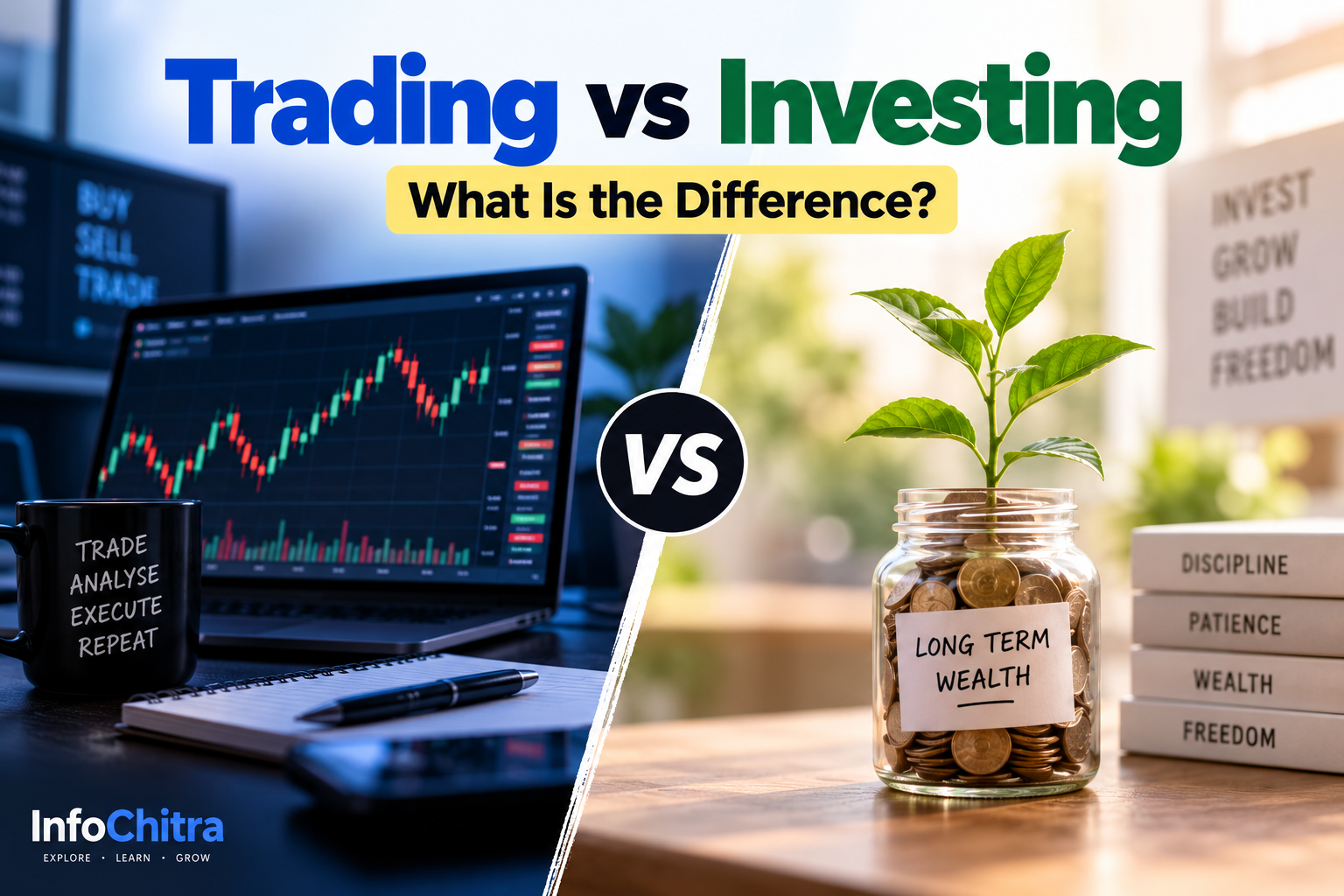
Trading vs Investing: What Is the Difference?
In our last lesson, What Is Trading?, we introduced the basic idea of buying and selling for profit. But you’ve probably also heard the word “investing” used almost interchangeably with trading — on YouTube, from relatives, even from your bank’s mobile app. Are they the same thing?
They are not. And understanding the difference early will save you from a lot of confusion — and from applying the wrong strategy to the wrong goal.
Table of Contents
- What Is Investing?
- Trading vs Investing: The Core Difference
- Time Horizon: Days vs Years
- Risk and Return: How They Compare
- Mindset: Active vs Passive
- Which One Is Right for You?
- Why MorningStocks Focuses on Trading
- Frequently Asked Questions
1. What Is Investing?

Investing means putting your money into an asset — like stocks, mutual funds, or bonds — with the expectation that its value will grow steadily over a long period, usually years. An investor buying shares of a strong company isn’t trying to catch a quick price jump; they’re betting on the company’s long-term growth, profits, and dividends.
Think of investing like planting a tree. You don’t dig it up every week to check if it’s grown. You water it, wait, and let time do the work.
2. Trading vs Investing: The Core Difference
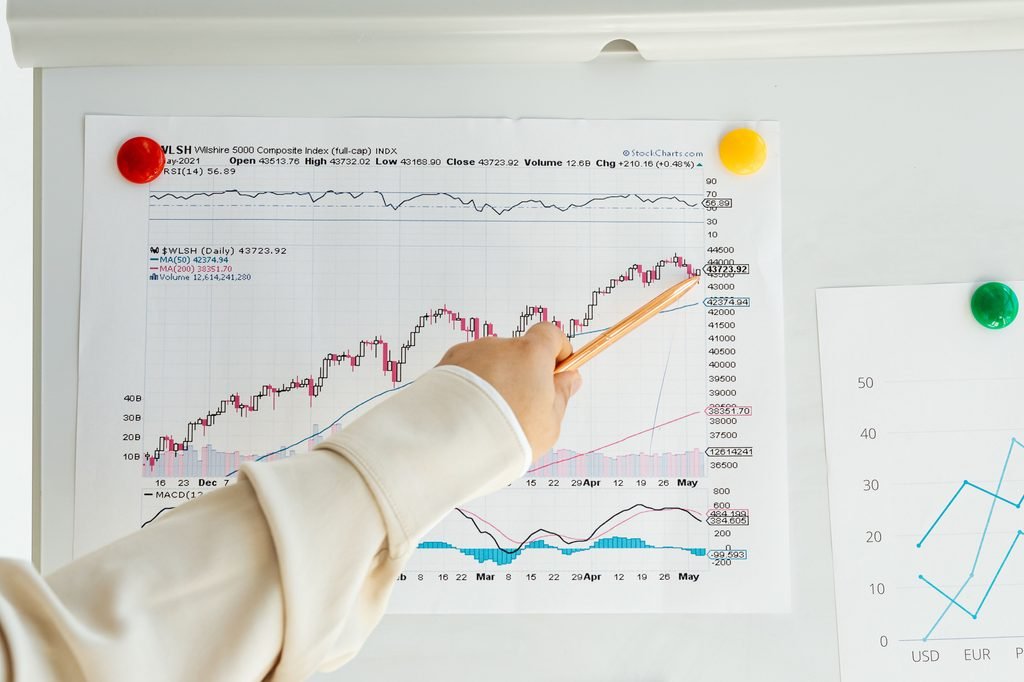
We touched on this briefly in our last post, but let’s go deeper here, because this is the single most important distinction in your entire trading journey.
| Trading | Investing | |
|---|---|---|
| Primary Goal | Profit from short-term price movement | Long-term wealth accumulation |
| Holding Period | Minutes to a few weeks | Months to many years |
| Decision Basis | Charts, price action, market structure | Company fundamentals, financials, growth |
| Monitoring | Requires daily, often hourly attention | Requires occasional review |
| Emotional Demand | High — decisions made under pressure | Lower — decisions made with patience |
A trader reacts to what the market is doing right now. An investor reacts to what a company (or economy) will likely do years from now.
3. Time Horizon: Days vs Years

This is the easiest way to tell the two apart. If someone buys a stock today planning to sell it by Friday, that’s trading. If someone buys a stock planning to hold it for five or ten years regardless of daily ups and downs, that’s investing.
Neither is “faster” or “slower” in a good or bad sense — they’re simply built for different objectives. A trader wants to compound gains through frequent, smaller wins. An investor wants to compound gains through the natural growth of a business over time.
4. Risk and Return: How They Compare

Trading generally carries higher short-term risk because prices can move sharply in minutes, and a trader is exposed to that volatility constantly. However, disciplined trading with proper risk management (a topic we dedicate an entire category to on this site) can generate faster returns.
Investing generally carries lower short-term risk because you’re not reacting to every daily price swing — but it requires patience, since meaningful returns usually take years to show up.
Neither approach eliminates risk. Both require knowledge. The difference is where the risk shows up and how quickly.
5. Mindset: Active vs Passive

This is where most beginners actually struggle — not with charts or numbers, but with mindset.
- A trader’s mindset must be alert, disciplined, and comfortable making quick decisions — including the decision to exit a losing position quickly.
- An investor’s mindset must be patient and comfortable ignoring short-term noise, even when the news looks scary.
If you try to trade with an investor’s patience, you’ll hold onto losing trades far too long. If you try to invest with a trader’s impatience, you’ll panic-sell good long-term assets during a normal dip. Knowing which mindset a situation calls for is half the battle.
Pro Tip: Before entering any position, ask yourself clearly: “Am I trading this, or investing in this?” Write your answer down. If you don’t know the answer, you’re not ready to enter yet.
6. Which One Is Right for You?

Ask yourself these honest questions:
- Do you have time to actively watch the market during the day, or only a few minutes in the evening?
- Do you get anxious watching a position move against you by a few percent within minutes?
- Are you looking for regular, smaller profits, or long-term wealth building?
If you enjoy active decision-making and can dedicate real time and emotional energy to the markets, trading may suit you. If you prefer a slower, steadier approach with less daily involvement, investing may suit you better. Many people eventually do both — trading with a portion of their capital, investing with the rest.
7. Why Morning Stocks Focuses on Trading

MorningStocks is built specifically as a trading education platform — taking you from zero knowledge to advanced trading skill, category by category. That means everything from here onward — chart reading, price action, market structure, risk management, and trading psychology — is built around the trader’s mindset and toolkit, not the investor’s.
If you decide trading isn’t the right fit for you after learning the basics, that’s a valuable realization too — better to know early than after risking real capital.
8. Frequently Asked Questions
Can the same person be both a trader and an investor?
Yes. Many market participants trade with a smaller, dedicated portion of their capital while investing the rest for long-term goals like retirement.
Is investing safer than trading?
Investing generally involves lower short-term volatility exposure, but it is not risk-free — markets can decline for extended periods, and individual companies can underperform or fail.
Do I need different knowledge for trading versus investing?
Yes. Trading relies heavily on chart reading, price action, and risk management. Investing relies more on company fundamentals, financial statements, and long-term economic trends.
I want quick profits — does that mean I should trade?
Wanting quick profits is a reason many beginners are drawn to trading, but it’s also exactly why so many lose money early — trading well requires skill and discipline, not just a desire for speed. This entire MorningStocks series is designed to build that skill properly before you risk real money.
What should I learn next?
Now that you understand the difference between trading and investing, the next step is understanding the different styles of trading itself — starting with Intraday Trading.
Read “What Is Intraday Trading?” to learn the fastest-paced style of trading and how it works.
This article is for educational purposes only and does not constitute investment or trading advice. Trading and investing in financial markets carries risk. Please read our full Disclaimer before making any financial decisions.